 November 11, 2026
Why I Think Reading Should Feel Like an Experience, Not a Task
Somewhere along the way, reading seems to have become another activity people are encouraged to measure. How many books have you finished?…
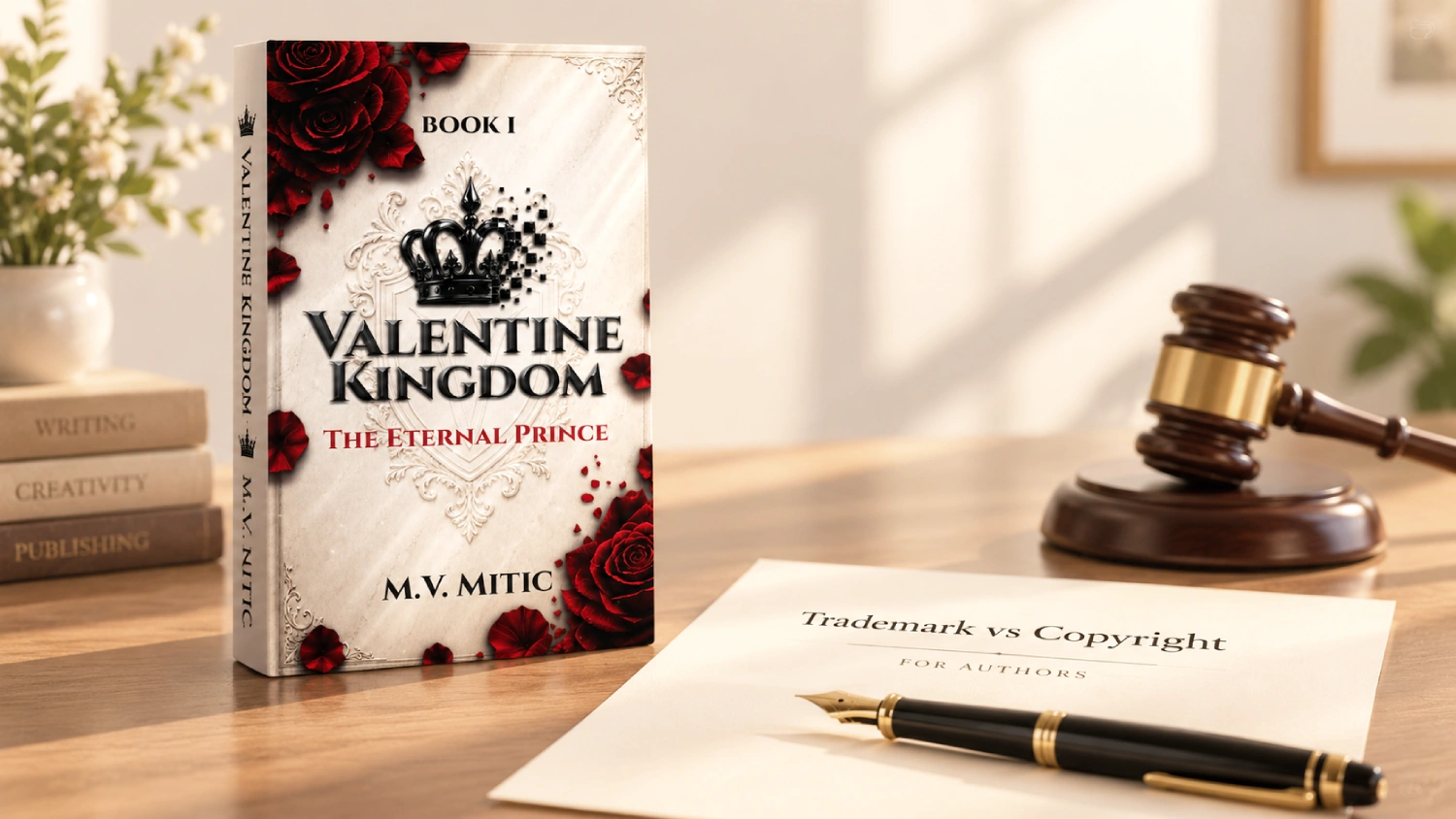
When I started thinking seriously about books as something larger than a single release, protection became much more important to me. Writing the story is one part of the work. Building the name, visual identity, website, covers and everything around that story is another. Both require time and creative effort, but they do not necessarily receive the same kind of legal protection.
I do not think every author needs to turn publishing into a complicated legal project from the beginning. Most writers already have enough to manage between developing manuscripts, editing, preparing books for publication and reaching readers. However, I do think it is worth understanding the difference between protecting the creative work itself and protecting the identity that gradually develops around it.
That is where copyright and trademarks begin to serve different purposes. Copyright is primarily concerned with original creative expression, while trademarks help distinguish the commercial source of goods or services. For an author planning a long-running series or an independent publishing business, understanding both can become increasingly important.
Copyright is the part I naturally associate with the actual creative work. The manuscript, chapters, illustrations and other original material are the things that make a book what it is. For me, that is the first layer of protection because the creative work exists before there is a publishing business or recognizable brand surrounding it.
If I spend months or years creating a world, developing characters and writing a story, I want to understand the rights associated with that work. Copyright generally arises automatically when an original work meets the applicable legal requirements, although registration procedures and enforcement options differ between countries. An author should not assume that publishing a book through a particular platform is what creates the copyright in the first place.
I think this distinction matters because authors sometimes concentrate so heavily on publishing arrangements that they overlook questions about ownership and permissions. A manuscript may begin as a private document, but it can later become a published novel, an audiobook, a translation or a collector’s edition. Each of those developments may involve other people, contracts and additional creative contributions.
Copyright does not protect every idea behind a story. General concepts, themes and familiar fictional elements are different from the particular expression an author creates. The distinction matters because fantasy, romance and other genres regularly explore similar subjects while presenting them through different characters, settings and narratives.
For me, the important point is that the original work remains the foundation beneath everything that follows. Understanding how copyright applies to that work is part of making informed decisions about its future.
Trademark protection interests me for a different reason. I think of it less as protecting the contents of one book and more as protecting the identity people begin to recognize. An author name used commercially, a publishing imprint, a distinctive logo or a broader entertainment brand can become associated with particular products and services.
A recognizable identity develops through repeated use. Readers encounter a name on a book cover, visit a website displaying the same branding and eventually begin identifying new releases through familiar visual elements. Over time, those elements may communicate something about where the books come from and what readers expect when they encounter them.
That recognition can become commercially valuable, particularly when an author publishes several books under a consistent identity. However, using a name or symbol does not automatically mean that it qualifies for trademark protection in every context. Distinctiveness, the nature of the goods or services, existing rights and the laws of the relevant country can all affect what protection is available.
Book titles also deserve careful consideration. In some jurisdictions, particularly the United States, the title of a single creative work is generally treated differently from a name identifying a continuing series or commercial source. That does not mean every series title automatically becomes a protected trademark, but it illustrates why the intended use of a name matters.
I find this distinction useful because authors often discuss copyright and trademarks as though they accomplish the same thing. In reality, an original novel and the commercial identity surrounding a collection of novels raise different questions.
This matters especially when a story is intended to continue. An author planning to publish one independent novel may have different branding priorities from someone developing a series that could eventually contain many books, special editions and related products.
A long-running series creates opportunities for its identity to become familiar. The name may appear on every cover, the website may use it prominently, and readers may begin searching for it directly rather than remembering individual book titles. New releases can benefit from that recognition because the audience already understands which fictional world or collection they belong to.
I think this changes how authors should approach early naming decisions. Choosing a series name because it sounds attractive is understandable, but considering whether it can support years of future releases is equally important. A name that works well for one book may not necessarily be suitable for a much larger collection.
There are also practical questions about availability. Before building an extensive identity around a name, I would want to understand whether other businesses or creators already use something similar in relevant markets. Website domains, social media handles and trademark records can provide useful information, although finding an available domain does not establish that a name is legally available as a trademark.
The objective is not to eliminate every possible complication before writing begins. It is to avoid investing years into an identity without considering whether that identity can realistically continue supporting the project.
I also think consistency matters. Changing a logo every few months, repeatedly redesigning the series identity or using different names across platforms makes it harder to build something memorable. Readers need opportunities to become familiar with the elements that represent the work.
I prefer choosing the important elements carefully and continuing to use them. A recognizable name, a consistent symbol and a deliberate visual style can create connections between books that might otherwise appear unrelated. The cover designs do not need to be identical, but they can share enough characteristics that readers recognize the collection.
For a fantasy series, visual consistency can be particularly useful. Different books may introduce new characters, locations and conflicts, yet the wider identity can remain familiar. The same principle applies to an author’s website, newsletters, announcements and future editions.
This is where I see branding and legal protection beginning to overlap. Consistent commercial use may help establish consumer recognition, while appropriate trademark protection can help address certain confusing uses by others. Neither creates value automatically. That value develops through the work, its reputation and the audience’s familiarity with it.
There is little reason to invest heavily in protecting a temporary design that will disappear after a short campaign. However, a name or symbol intended to represent a series for ten or twenty years deserves considerably more attention.
Visual identity introduces another set of questions because a book cover can involve several different creative elements. Typography, illustration, photography, layout and logos may come from different sources, each with its own ownership or licensing arrangements.
An author might commission an illustrator, purchase licensed stock imagery or work with a designer who combines several elements into a finished cover. The fact that the author pays for that work does not always mean every underlying right transfers automatically. The applicable agreement and law determine what the author is permitted to reproduce, modify or use commercially.
I would therefore pay attention to the terms attached to commissioned and licensed artwork. A cover intended only for an ebook may eventually be needed for printed editions, promotional materials, collector products or international releases. Knowing which uses are permitted can prevent difficulties when the publishing project expands.
The same applies to logos. If a distinctive symbol is expected to represent a long-running brand, its ownership and permitted uses should be clear from the beginning. It would be frustrating to establish a recognizable identity only to discover later that important modifications or commercial uses require additional permission.
For me, visual design is not simply decoration. It contributes to how readers recognize the work, which makes clear ownership and consistent use increasingly valuable as the project grows.
Copyright protection is also closely connected to publishing agreements. An author may own the copyright in a manuscript while granting a publisher permission to produce, distribute or sell particular versions of the work. The extent of that permission depends on the contract.
This is why I think authors should distinguish between ownership and licensing. A publisher may receive rights to distribute an ebook in certain territories without necessarily becoming the copyright owner. Other agreements may be considerably broader, covering additional formats, languages or periods of time.
I would want to understand exactly what a publishing contract permits, how long those permissions last and what happens when the agreement ends. Audiobook rights, translation rights and the ability to create new editions can become important even when they do not seem relevant during the first release.
A series can also introduce complications when different books are covered by different arrangements. An author might want to release a collector’s edition containing several titles, for example, but the ability to do so may depend on rights previously granted to another party.
These questions are not reasons to avoid traditional publishing or outside partnerships. They are reasons to understand the consequences of an agreement before making long-term commitments.
A publishing arrangement should support the creative work without creating unnecessary uncertainty about its future.
Although I value understanding intellectual property protection, I would not try to register or protect every small element of a publishing project immediately. Authors can easily spend more time considering paperwork than developing the work those protections are meant to support.
I think the important question is what the author genuinely expects to remain valuable over time. A finished manuscript, a permanent publishing identity or a distinctive logo may deserve serious attention. A temporary promotional graphic or experimental design may not justify the same investment.
There is also a difference between copyright protection existing and deciding whether formal registration is worthwhile. Depending on the jurisdiction, registration can provide procedural or enforcement advantages even where protection already arises automatically. Authors should evaluate those benefits in relation to their circumstances rather than assuming every country follows the same rules.
Trademark registration involves its own considerations, including the jurisdictions, goods or services covered and the possibility of conflicts with existing marks. Protection is generally territorial, which means rights established in one country do not necessarily provide equivalent coverage everywhere.
Costs matter as well. Filing fees, professional assistance and future maintenance expenses can accumulate, particularly when several countries or categories are involved. I would rather prioritize the elements central to a long-term publishing identity than attempt to protect every possible future use before the business has developed.
The goal is thoughtful planning, not unnecessary complexity.
An author brand can eventually represent much more than individual books. Readers may associate it with a particular fictional world, style of storytelling or standard of presentation. Additional editions, audiobooks and related projects can strengthen that association when they remain connected to a consistent identity.
I find the long-term aspect particularly interesting. A fictional world may begin with a single manuscript, but successful characters and stories can remain relevant for many years. The books may eventually reach new audiences through different formats or languages, creating opportunities that were not practical when the first story was written.
A strong identity makes those developments easier for readers to recognize. Someone encountering an audiobook or new edition should be able to understand its relationship to the original series without having to investigate several unrelated names.
However, I do not believe a registered trademark alone creates a successful brand. Readers need reasons to care about the work. The quality of the stories, the consistency of publication and the experiences associated with the name all contribute to recognition.
Legal protection can help preserve an identity, but the underlying reputation must still be earned. For me, protecting a brand makes the most sense when it supports something that is being developed through continued creative and commercial effort.
I do not really see copyright and trademark protection as alternatives. They serve different purposes and can become relevant to different parts of the same publishing project.
Copyright concerns original creative expression, including the text of a novel and other qualifying artistic works. Trademark protection concerns distinctive signs used to identify the source of goods or services. A particular book, the visual artwork used to present it and the identity of the series surrounding it may therefore involve several separate rights.
Understanding those differences can help an author make better decisions about contracts, artwork, names and future releases. It also reduces the temptation to assume that one registration or legal document protects every aspect of a creative business.
For someone publishing one standalone book, the practical priorities may be relatively straightforward. For an author developing a long-running series, independent publishing identity or larger fictional world, the questions can become more important as the project grows.
I prefer approaching those decisions gradually, beginning with what already exists and considering future protection as the work becomes more established.
The story is worth protecting because of the creative effort behind it. The identity surrounding that story may also become valuable as readers begin recognizing and returning to it.
For me, that is the essential distinction: copyright helps protect the work, while trademarks can help protect the recognizable identity built around it.
Both deserve consideration when an author intends to create something that lasts.
You can explore more of my writing and publishing projects on the M.V. Mitic website.
November 11, 2026Somewhere along the way, reading seems to have become another activity people are encouraged to measure. How many books have you finished?…
 November 11, 2026
People often talk about reading goals as though finishing more books automatically means becoming a better reader. Read fifty books this year,…
 November 11, 2026
Digital reading has made books more accessible than ever. We can carry entire libraries on our phones, purchase ebooks almost instantly and…
 November 11, 2026
Have you ever noticed how much easier it is to enjoy a book when your surroundings feel comfortable? I think the environment…
 November 11, 2026
The beginning of a new year often creates pressure to make ambitious resolutions. Write an entire novel, publish several books, build a…
 November 11, 2026
Christmas attracts enormous attention from retailers, publishers and businesses offering seasonal promotions. Throughout December, customers encounter discounted products, gift recommendations and advertisements…
 November 11, 2026
Holiday travel often involves packing more things than expected. Clothes, gifts, personal belongings and everything else compete for limited space. Whether somebody…
 November 11, 2026
December seems like an attractive month to release a book. People are shopping for Christmas gifts, spending more time indoors and looking…
 November 11, 2026
Every winter, online stores begin advertising seasonal discounts, limited-time offers and holiday promotions. Books are no exception. A lower price can make…
 November 11, 2026
Holiday shopping has become increasingly dominated by electronics, subscriptions and products that often disappear from attention shortly after they are purchased. Every…
November 11, 2026Somewhere along the way, reading seems to have become another activity people are encouraged to measure. How many books have you finished?…
November 11, 2026People often talk about reading goals as though finishing more books automatically means becoming a better reader. Read fifty books this year,…
November 11, 2026Digital reading has made books more accessible than ever. We can carry entire libraries on our phones, purchase ebooks almost instantly and…
November 11, 2026Have you ever noticed how much easier it is to enjoy a book when your surroundings feel comfortable? I think the environment…
November 11, 2026The beginning of a new year often creates pressure to make ambitious resolutions. Write an entire novel, publish several books, build a…
November 11, 2026Christmas attracts enormous attention from retailers, publishers and businesses offering seasonal promotions. Throughout December, customers encounter discounted products, gift recommendations and advertisements…
November 11, 2026Holiday travel often involves packing more things than expected. Clothes, gifts, personal belongings and everything else compete for limited space. Whether somebody…
November 11, 2026December seems like an attractive month to release a book. People are shopping for Christmas gifts, spending more time indoors and looking…
November 11, 2026Every winter, online stores begin advertising seasonal discounts, limited-time offers and holiday promotions. Books are no exception. A lower price can make…
November 11, 2026Holiday shopping has become increasingly dominated by electronics, subscriptions and products that often disappear from attention shortly after they are purchased. Every…

Add the M.V. Mitic app to your device and start reading.