 November 11, 2026
Why I Think Reading Should Feel Like an Experience, Not a Task
Somewhere along the way, reading seems to have become another activity people are encouraged to measure. How many books have you finished?…
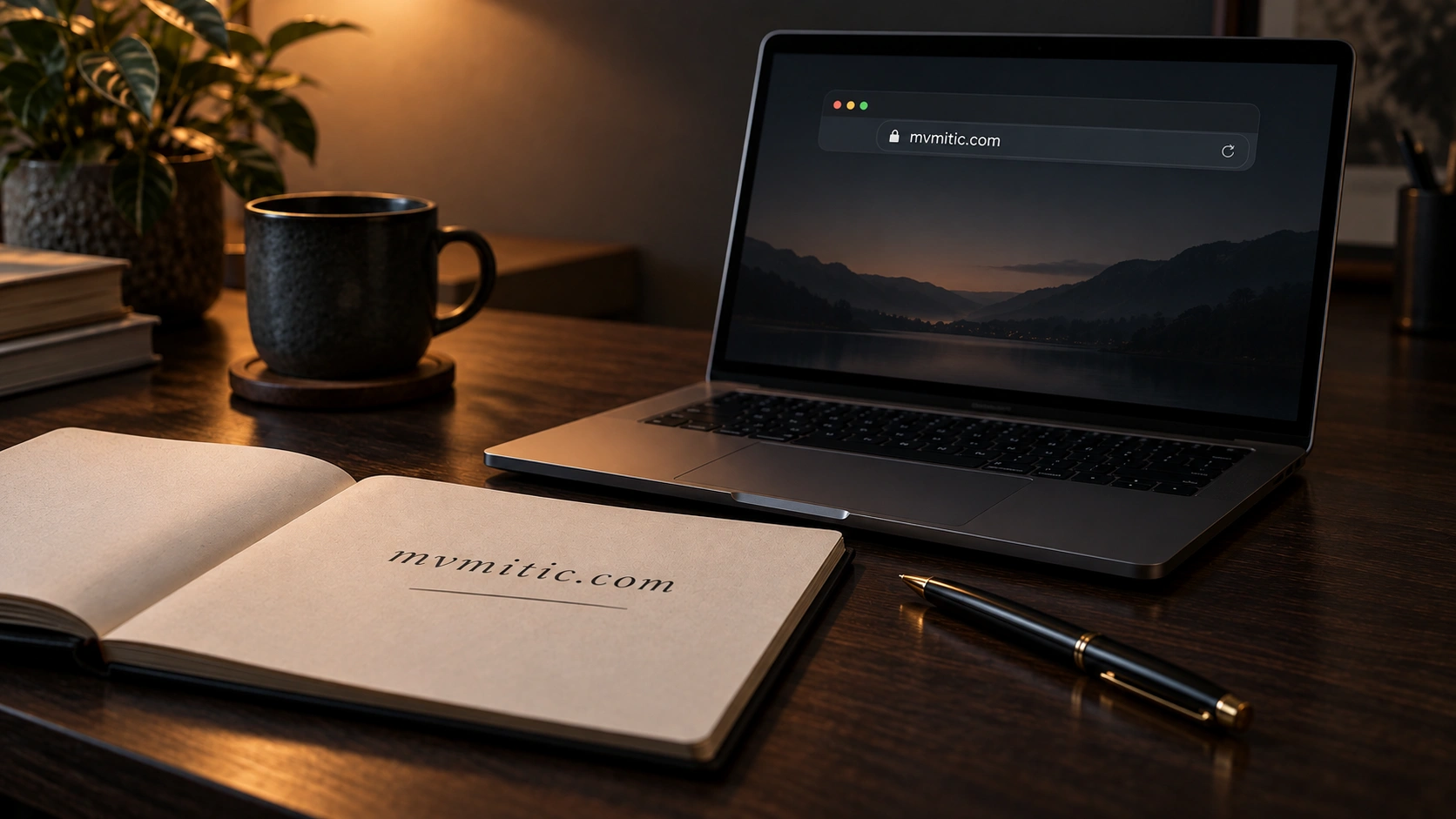
A domain name seems like a very small part of building an author brand. You buy it, connect it to a website and probably stop thinking about it. Compared with writing books, designing covers and creating an entire website, choosing an address can appear almost insignificant. It is usually one of the first decisions an author makes, but it rarely receives the same attention as the more visible parts of the project.
Personally, I think a domain becomes much more important over time because it gives the whole brand one permanent address. Readers may discover an author through different platforms, search engines or recommendations, but having one recognizable destination makes it easier for everything to remain connected.
I also like the simplicity of it. A domain does not need to contain every detail about the author’s work. It only needs to provide an address that people can remember and return to. The website behind that address can change considerably over the years without requiring the identity itself to change.
For me, that makes choosing a domain less about finding something fashionable today and more about deciding what I would still want to use many years from now.
Social media usernames depend on the platforms where they exist. An author may spend years building an audience under a particular username, but the platform still determines how profiles work, what features are available and how people discover the account.
A domain is different. As long as you maintain its registration, you can decide where it points and what website or services operate behind it. You can change hosting providers, redesign the website or rebuild the entire publishing platform without changing the address readers already recognize.
I like that flexibility because online projects rarely remain exactly as they were when they began. An author might start with a simple homepage and later introduce articles, a newsletter, book sales or a personal reading library. The original domain can continue representing the project throughout those changes.
There are still responsibilities involved. Domain registrations require renewal, and the registrar’s rules and applicable policies continue to matter. Having a domain does not mean owning the name without conditions forever. However, maintaining control over the registration provides a level of independence that a social media profile alone cannot offer.
For me, that is an important distinction. I would rather build the central identity of my publishing work around an address I can continue using across different services than depend entirely on one platform remaining unchanged.
For an author, I think using your own name is usually a sensible choice. A book can end, a series can conclude, and a writer may eventually decide to explore completely different genres or subjects. The author’s identity can remain relevant throughout those changes.
This is particularly useful when building a career that may contain several unrelated projects. Someone might begin with fantasy fiction, publish nonfiction later or create an entirely different series. If the main website uses the author’s name, there is no need to replace the domain every time the creative direction changes.
I also think a personal domain provides a clearer connection between different kinds of work. Articles, books, announcements and professional information can all belong to the same author identity without requiring separate websites for every subject.
A fictional world or established series may eventually benefit from having its own domain as well. That can make sense when the project has enough material and identity to support a dedicated destination. However, I still prefer keeping the author’s name as the main professional foundation.
For me, the distinction is straightforward. An author domain represents the person creating the work, while a series domain can represent one particular creative project. Both can be useful, but they do not need to serve identical purposes.
I would not try to make a domain too clever. Short and memorable is usually better, particularly when someone encounters the name outside the website itself. If readers hear the address in a conversation, see it in a book or notice it on social media, they should have a reasonable chance of remembering it later.
Complicated spelling can create unnecessary problems. Unusual abbreviations, excessive hyphens and long combinations of unrelated words may make a domain harder to communicate. A name might look distinctive on a screen but become difficult to explain when someone asks how to find the website.
I prefer choosing something that feels natural when written and spoken. That does not mean every useful domain must be extremely short. Sometimes a longer name is perfectly reasonable when it is recognizable and easy to understand.
The domain extension also deserves some thought. A familiar extension such as .com may be appropriate for an author targeting an international audience, while other extensions can work well depending on the project’s identity and purpose. I would not assume that choosing a more expensive or unusual extension automatically makes the website more professional.
What matters most is whether the complete address feels appropriate for the brand. A domain should be easy enough to use in emails, advertisements, printed materials and ordinary conversations without requiring lengthy explanations.
One thing I particularly like about having a dedicated domain is how it connects different parts of an author’s online presence. A website may begin with only a homepage, but it can gradually become the central destination for several activities.
Readers might visit to explore a book, learn about an upcoming release or read an article. Others may want to contact the author, subscribe to a newsletter or return to a personal library. All these functions can exist under the same recognizable address without needing a completely separate identity for each one.
I think this becomes increasingly useful as the number of projects grows. A new book may have its own page, while an older series can remain available through the same website. Articles published years earlier can continue attracting visitors, and important announcements can remain accessible instead of disappearing into social media feeds.
The domain provides continuity between those experiences. Someone who remembers the author’s website can return later without needing to know which platform currently hosts the books or which social account contains the newest announcement.
For me, that is one of the reasons an author website should be treated as something more permanent than a temporary promotional page. The domain gives the entire project a recognizable home, even as the content and services behind it develop.
Email is another area where a domain can become useful. An address connected to an author’s website often feels more established than one using a generic free email service, particularly when communicating about publishing arrangements, business inquiries or reader support.
I do not think a custom email address automatically makes someone more trustworthy. A recognizable address can still be used poorly, and professionalism depends on much more than the words appearing after the @ symbol. However, consistency between the website and email address can make the overall identity easier to recognize.
For example, someone receiving a message about a book may feel more familiar with the sender when the email domain matches the website they previously visited. That connection is useful when readers receive newsletters, purchase confirmations or responses to support requests.
A domain can also support different addresses for different purposes without requiring separate public identities. Contact inquiries, business communications and reader support can use appropriate addresses connected to the same website.
I like the organizational benefit as much as the visual one. The website and email system can remain part of a consistent publishing identity, making it easier for readers and business contacts to understand where communications are coming from.
Another advantage of a permanent domain is the ability to change the infrastructure behind a website without changing its public address. Hosting providers, website software and technical requirements can all evolve as an author publishes more content and attracts additional visitors.
An author might begin with affordable shared hosting and later move to a more powerful service. They might replace a theme, change the ecommerce system or redesign the reading experience. Those decisions can involve considerable technical work, but they do not necessarily require a new domain.
I find that reassuring because choosing a website platform should not determine the identity of the entire publishing project forever. Technology changes, and something that works well today may eventually be replaced by a better option.
Of course, website migrations need to be handled properly. Existing pages, internal links, redirects, email settings and other technical details may require attention. Maintaining the same domain does not automatically guarantee a problem-free transition.
However, the ability to preserve the address while improving the underlying website is valuable. Readers can continue using the name they already know, even when the infrastructure supporting it changes considerably.
For me, the domain should be one of the most stable parts of the project, while the technology behind it remains flexible enough to develop over time.
A domain can gradually become associated with a growing collection of pages, articles and references from other websites. Search engines discover and evaluate individual pages, while links from outside sources may help people find the author’s content.
I think this is another reason to avoid changing domains unnecessarily. When a website has existed for several years, its address may appear in old articles, book descriptions, social profiles, interviews and other places that are difficult to update individually.
Moving to a different domain is possible, and search engines provide ways to handle website migrations. However, changing addresses still introduces additional work and the possibility of temporary disruption. Existing links may need redirects, and visitors who remember the older address may continue using it.
I would rather avoid those complications when there is no genuine reason to make the change. Choosing an appropriate domain early can reduce the temptation to replace it later simply because the project has become larger.
That does not mean an old domain automatically receives better search rankings. Useful content, technical accessibility and many other factors influence search visibility. The value of continuity is that existing references and audience familiarity can remain connected to the same recognizable address.
For an author publishing articles regularly, preserving that continuity can become increasingly worthwhile.
Branding is often discussed in terms of logos, colours, typography and book covers. Those elements are important, but I think the domain deserves a place in the same conversation because readers may encounter it repeatedly across different parts of the author’s work.
A website address can appear on printed books, newsletters, social profiles, advertisements and promotional materials. Over time, people may begin recognizing it without needing to think about what it represents. That familiarity develops through consistent use rather than the domain possessing any special value on its own.
I prefer keeping the main elements of a brand stable once they have been chosen carefully. Constantly changing names, logos or addresses can make the identity harder to recognize, particularly when new releases are supposed to belong to the same body of work.
There is also a legal distinction worth understanding. Registering a domain does not automatically grant trademark rights to the name it contains. An author planning to build a substantial publishing identity should consider whether the name conflicts with existing commercial uses or rights.
For me, the practical lesson is to choose carefully before making the name a permanent part of the project. A domain can be inexpensive to register but costly to replace after years of branding and public recognition.
Because a domain can become so important, I think maintaining it deserves more attention than simply purchasing it once and forgetting about it. Domain registrations generally operate through renewal periods, and allowing an important address to expire can create unnecessary problems.
I would make sure renewal reminders are enabled and the registrar account remains accessible. Automatic renewal can be useful, although payment details and account notifications still need occasional attention.
Account security also matters. Strong authentication and accurate recovery information help protect access to the registration. Losing control of a domain can affect the website, email and other services connected to it, which makes the registrar account particularly important.
I also prefer maintaining clear records of where the domain is registered and which services depend on it. Those details may not seem important while everything works normally, but they become valuable during migrations, technical problems or changes to the hosting arrangement.
For me, protecting a domain is simply part of maintaining the publishing business. It may be one of the least expensive components, but it can become one of the most difficult to replace.
When choosing a domain, I would think beyond the first book or the website’s initial design. An author may begin with a relatively small project, but the same identity could eventually represent several books, different genres, articles, newsletters or an entire fictional world.
That is why I prefer names that allow room for future development. A domain that describes one temporary campaign or a very specific release may become less suitable when the project moves in another direction.
A personal author domain generally offers that flexibility, while a dedicated series domain can make sense when the fictional world develops a recognizable identity of its own. The important thing is understanding the different purposes before deciding which name should become the permanent destination.
I do not think authors need to buy dozens of domains in anticipation of projects that may never happen. I would rather choose a small number of meaningful names and use them consistently than collect addresses without a clear purpose.
For me, a domain is more than a technical requirement for publishing a website. It is the address readers can remember, the place where different projects remain connected and an important part of a brand that may continue developing for decades.
Almost everything behind a website can be redesigned, upgraded or replaced later. The domain is the part I would choose carefully from the beginning because, ideally, it remains familiar for a very long time.
November 11, 2026Somewhere along the way, reading seems to have become another activity people are encouraged to measure. How many books have you finished?…
 November 11, 2026
People often talk about reading goals as though finishing more books automatically means becoming a better reader. Read fifty books this year,…
 November 11, 2026
Digital reading has made books more accessible than ever. We can carry entire libraries on our phones, purchase ebooks almost instantly and…
 November 11, 2026
Have you ever noticed how much easier it is to enjoy a book when your surroundings feel comfortable? I think the environment…
 November 11, 2026
The beginning of a new year often creates pressure to make ambitious resolutions. Write an entire novel, publish several books, build a…
 November 11, 2026
Christmas attracts enormous attention from retailers, publishers and businesses offering seasonal promotions. Throughout December, customers encounter discounted products, gift recommendations and advertisements…
 November 11, 2026
Holiday travel often involves packing more things than expected. Clothes, gifts, personal belongings and everything else compete for limited space. Whether somebody…
 November 11, 2026
December seems like an attractive month to release a book. People are shopping for Christmas gifts, spending more time indoors and looking…
 November 11, 2026
Every winter, online stores begin advertising seasonal discounts, limited-time offers and holiday promotions. Books are no exception. A lower price can make…
 November 11, 2026
Holiday shopping has become increasingly dominated by electronics, subscriptions and products that often disappear from attention shortly after they are purchased. Every…
November 11, 2026Somewhere along the way, reading seems to have become another activity people are encouraged to measure. How many books have you finished?…
November 11, 2026People often talk about reading goals as though finishing more books automatically means becoming a better reader. Read fifty books this year,…
November 11, 2026Digital reading has made books more accessible than ever. We can carry entire libraries on our phones, purchase ebooks almost instantly and…
November 11, 2026Have you ever noticed how much easier it is to enjoy a book when your surroundings feel comfortable? I think the environment…
November 11, 2026The beginning of a new year often creates pressure to make ambitious resolutions. Write an entire novel, publish several books, build a…
November 11, 2026Christmas attracts enormous attention from retailers, publishers and businesses offering seasonal promotions. Throughout December, customers encounter discounted products, gift recommendations and advertisements…
November 11, 2026Holiday travel often involves packing more things than expected. Clothes, gifts, personal belongings and everything else compete for limited space. Whether somebody…
November 11, 2026December seems like an attractive month to release a book. People are shopping for Christmas gifts, spending more time indoors and looking…
November 11, 2026Every winter, online stores begin advertising seasonal discounts, limited-time offers and holiday promotions. Books are no exception. A lower price can make…
November 11, 2026Holiday shopping has become increasingly dominated by electronics, subscriptions and products that often disappear from attention shortly after they are purchased. Every…

Add the M.V. Mitic app to your device and start reading.