 November 11, 2026
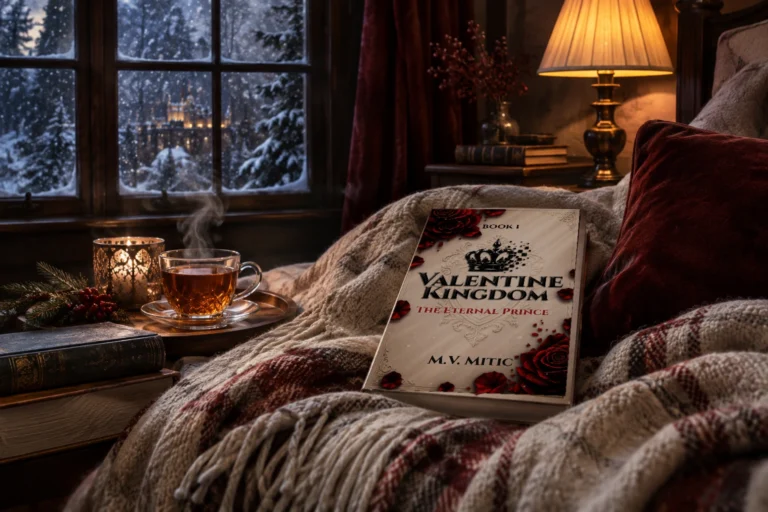
Why I Think Reading Should Feel Like an Experience, Not a Task
Somewhere along the way, reading seems to have become another activity people are encouraged to measure. How many books have you finished?…

One thing I have never liked about social media is that having followers does not necessarily mean being able to reach those followers. A platform can show one post to thousands of people and then barely distribute the next one, even when both posts come from the same account. Algorithms change, networks rise and fall, accounts can lose visibility and eventually an audience somebody spent years building may become much harder to contact. That does not make social media useless, but I personally do not want it sitting at the center of my publishing business. I would rather use those platforms to help people discover M.V. Mitic and Valentine Kingdom while keeping the main foundation somewhere I control.
For me, the distinction is between using a platform for discovery and depending on it for the entire relationship with readers. My website provides a permanent home for articles, books, the digital Library, newsletters and other parts of the publishing project. Social media can introduce people to those things, but I do not want the business depending entirely on whether a particular company decides to distribute my next post. I prefer building a connected audience that knows where to find the original content, regardless of which platform introduced them to it.
One of the problems with building an audience exclusively through social media is that follower counts can create a misleading impression of how many people can actually be reached. An account might have thousands of followers, but that does not mean every new post will appear in front of those people. Distribution depends on the platform’s algorithms, audience activity, content format and other factors that individual creators cannot fully control. Someone may spend years developing an audience only to discover that the publishing methods that previously worked no longer receive the same attention.
I think this makes long-term planning difficult, particularly for authors who release books over several years. A writer may want to announce a new novel to people who previously expressed interest, but those followers may never see the announcement. The audience technically exists, yet communicating with it can become unpredictable. Social platforms can still provide enormous opportunities for discovery, and a successful post may attract attention much faster than an ordinary article. However, I prefer treating those results as additional opportunities rather than something the entire business must depend on. If one platform becomes less useful, I want the original content, books and reader relationships to remain accessible through the website.
If someone discovers one of my articles through Pinterest, Bluesky, Facebook, X or another platform, that is useful. Ideally, though, that journey eventually brings them to my website. That is where everything connects: the articles, books, Library, newsletter, customer accounts and reading experience. Someone interested in publishing can explore related articles, while a visitor curious about Valentine Kingdom can discover the fictional world and begin reading The Eternal Prince. The different sections serve different purposes, but they belong within the same publishing environment.
I like having one recognizable location because it gives the project a clearer structure and allows me to decide how its different parts work together. If I want to redesign the homepage, add another book, improve the reader or create a new section, I can develop those features directly. I do not need to wait for a social platform to introduce particular functionality or determine how prominently my work should appear. Of course, operating an independent website still involves relying on hosting providers, payment services and other technical systems. However, keeping the original content and publishing infrastructure under my own domain provides considerably more flexibility than building everything inside accounts controlled by other companies.
I prefer thinking of social media as a collection of roads leading toward the website rather than the land everything is built on. A visitor might discover an article through Pinterest, another person might follow a link on Bluesky, and someone else may arrive through Facebook or X. Those platforms provide different routes, but the destination remains the same. This arrangement makes content distribution much more manageable because the original article exists before anything is shared. I can publish one useful piece of writing on my website and allow different networks to introduce it to their audiences without creating an entirely separate article for each platform.
Different platforms can also provide different kinds of attention. Pinterest may continue showing older Pins through searches and recommendations, while other networks can produce more immediate interest around newly published content. Neither approach guarantees meaningful traffic, but both create opportunities for discovery. I also like that a website article remains available even when its original social post stops receiving attention. It can be linked from newer articles, discovered through search engines or shared again when the subject becomes relevant. For me, this is much more efficient than constantly creating temporary material without developing a permanent collection of content.
A newsletter subscriber or registered reader represents a different kind of connection from a social follower. That person has deliberately chosen to interact more directly with the website, whether by subscribing to updates, creating an account or purchasing a book. The relationship does not depend entirely on a social media feed, although email delivery, account access and continued reader interest still need to be maintained. I think this becomes particularly valuable when a publishing catalogue expands because every future release does not necessarily have to be introduced to a completely unfamiliar audience.
Someone who purchases The Eternal Prince may eventually return for another Valentine Kingdom book. A visitor who enjoyed the opening chapters might remember the series and decide to continue later. Another person may subscribe through the M.V. Mitic Newsletter because they want to hear about future releases without following several different social accounts. I prefer sending meaningful announcements rather than frequent messages created simply to maintain attention. New books, important reader improvements and selected articles provide natural reasons to contact subscribers. For me, the value is developing a direct relationship that can continue between individual book launches instead of repeatedly starting the entire discovery process from zero.
One reason I prefer maintaining my own website is the possibility of attracting visitors through evergreen articles. A useful article can remain available long after publication and potentially receive search traffic without needing to be posted again every day. Questions about author websites, hosting, publishing, ecommerce and intellectual property do not necessarily become irrelevant after a week. Some details may require updating, but the underlying subjects can remain interesting to readers for a considerable period.
This approach allows the content library to grow gradually instead of constantly replacing itself. An article published today joins the existing collection, and newer content can connect with older explanations through relevant internal links. Some pages may attract visitors through Google, others through Pinterest, and certain articles may remain useful primarily to people already exploring the website. I do not expect every post to perform equally, but I like having multiple opportunities for discovery. The same visitor who arrives through an informational article may eventually explore the books, while someone interested in fiction can go directly to the free chapters of The Eternal Prince. The website can support both interests without requiring every article to become a book advertisement.
Pinterest is one platform I find particularly interesting because it can function as a longer-term discovery channel rather than depending entirely on immediate engagement. I originally approached it as another place to share featured images from my articles, but after using it for a while, I noticed that individual Pins could continue collecting impressions after publication. That made it more appealing for evergreen subjects because an older image could potentially introduce someone to an article weeks or months later.
The important distinction is that the article remains on my website while Pinterest provides another way to discover it. A relevant featured image can attract attention, and interested visitors can follow the link toward the original content. I also distinguish between impressions and outbound clicks because someone seeing a Pin is not the same as someone visiting the website. A Pin might receive considerable visibility without generating much traffic, while another with fewer impressions could attract more interested visitors. For me, the platform is useful when it contributes actual discovery, not simply when its dashboard displays large numbers. I want Pinterest to support my article library rather than become another independent business that requires constant attention.
One thing I want to avoid is treating every social media account as though it requires its own independent content strategy, identity and daily workload. I do not want a Pinterest business, a Facebook business and an X business competing for attention while the actual books and website receive less of my time. Each platform encourages different publishing formats and habits, and trying to optimize everything independently can become a substantial amount of work. That is particularly relevant when operating a publishing project alone, where writing, editing, website maintenance and product development already require considerable attention.
I prefer keeping the original content centralized and allowing distribution to remain as simple as possible. Articles can be prepared with suitable titles, featured images and destination links, while appropriate publishing connections can reduce repetitive sharing tasks. Automation still needs occasional checking because links, images and platform connections can fail, but I would rather verify an efficient system than manually rebuild every post for several networks. The objective is to spend more time creating books and useful articles while allowing social platforms to help people find them. For me, one connected publishing identity is much more manageable than several separate audience-building operations.
The digital Library is another reason I want the website at the center of the publishing business. Someone purchasing The Eternal Prince can have their reading access connected to a customer account, making it possible to return to the same platform later. As more Valentine Kingdom books become available, I want readers to find them within an environment they already understand rather than learning an entirely different purchasing or reading system for every release.
This creates continuity between the books and the infrastructure surrounding them. The account system, checkout and reader can potentially support additional titles, while the newsletter provides a way to announce important developments to people who have chosen to receive those updates. The website also remains useful between releases because articles continue providing information and existing books remain accessible. I think that matters for a long-term series, where readers may return after several months or even years. The objective is to make those relationships easier to maintain without assuming every customer will purchase every future product. A connected Library provides a practical foundation, but the writing still needs to give people a reason to return.
Although I prefer keeping the website central, I do not think independence requires rejecting every outside platform. Social networks can introduce people to new content, search engines help visitors discover useful information, and established bookstores provide services that may be difficult or unnecessary to recreate independently. This is particularly relevant for physical books, where printing, distribution and shipping involve responsibilities that specialized providers already handle. Using those services can make sense even when digital reading access is offered directly through the author’s website.
I prefer deciding what each service should contribute instead of assuming everything needs to be handled exclusively through one channel. A social platform can help with discovery, a distributor can support physical availability, and a payment provider can process digital transactions. The website remains the recognizable place connecting the books, articles and reader experience. That gives me flexibility to use external services where they are useful without building the entire identity of the publishing business around them. For me, independence is not about refusing outside platforms. It is about maintaining a central foundation that continues existing regardless of which individual distribution channels are currently performing best.
Ultimately, I want M.V. Mitic and Valentine Kingdom to develop one connected audience that can discover the project through many different places. Someone may first encounter an article on Pinterest, another visitor may arrive through Google, and someone else may discover the books through an external retailer. Those journeys can be different, but they do not need to lead toward completely separate identities or disconnected experiences.
I prefer creating a recognizable website where the articles, books, newsletter and digital Library support one another. Readers who enjoy the first book can return when another becomes available, while visitors interested in informational content can continue exploring the growing article archive. Social platforms remain useful because they introduce new people to the project, but they do not need to control the entire relationship afterward.
I understand why some authors enjoy building large communities directly on social media, and that approach can work well for people who prefer constant interaction. Personally, I would rather spend most of my time producing work that remains useful beyond the day it was published. A book can continue attracting readers, an article can remain discoverable and a website can gradually become a more complete publishing platform.
For me, the goal is not to collect the largest possible number of followers across every network. It is to develop an audience that recognizes the work, knows where to find it and has a reason to return. Social media can provide the roads, but I want the books, content and long-term publishing business to have a permanent home of their own.
November 11, 2026Somewhere along the way, reading seems to have become another activity people are encouraged to measure. How many books have you finished?…
 November 11, 2026
People often talk about reading goals as though finishing more books automatically means becoming a better reader. Read fifty books this year,…
 November 11, 2026
Digital reading has made books more accessible than ever. We can carry entire libraries on our phones, purchase ebooks almost instantly and…
 November 11, 2026
Have you ever noticed how much easier it is to enjoy a book when your surroundings feel comfortable? I think the environment…
 November 11, 2026
The beginning of a new year often creates pressure to make ambitious resolutions. Write an entire novel, publish several books, build a…
 November 11, 2026
Christmas attracts enormous attention from retailers, publishers and businesses offering seasonal promotions. Throughout December, customers encounter discounted products, gift recommendations and advertisements…
 November 11, 2026
Holiday travel often involves packing more things than expected. Clothes, gifts, personal belongings and everything else compete for limited space. Whether somebody…
 November 11, 2026
December seems like an attractive month to release a book. People are shopping for Christmas gifts, spending more time indoors and looking…
 November 11, 2026
Every winter, online stores begin advertising seasonal discounts, limited-time offers and holiday promotions. Books are no exception. A lower price can make…
 November 11, 2026
Holiday shopping has become increasingly dominated by electronics, subscriptions and products that often disappear from attention shortly after they are purchased. Every…
November 11, 2026Somewhere along the way, reading seems to have become another activity people are encouraged to measure. How many books have you finished?…
November 11, 2026People often talk about reading goals as though finishing more books automatically means becoming a better reader. Read fifty books this year,…
November 11, 2026Digital reading has made books more accessible than ever. We can carry entire libraries on our phones, purchase ebooks almost instantly and…
November 11, 2026Have you ever noticed how much easier it is to enjoy a book when your surroundings feel comfortable? I think the environment…
November 11, 2026The beginning of a new year often creates pressure to make ambitious resolutions. Write an entire novel, publish several books, build a…
November 11, 2026Christmas attracts enormous attention from retailers, publishers and businesses offering seasonal promotions. Throughout December, customers encounter discounted products, gift recommendations and advertisements…
November 11, 2026Holiday travel often involves packing more things than expected. Clothes, gifts, personal belongings and everything else compete for limited space. Whether somebody…
November 11, 2026December seems like an attractive month to release a book. People are shopping for Christmas gifts, spending more time indoors and looking…
November 11, 2026Every winter, online stores begin advertising seasonal discounts, limited-time offers and holiday promotions. Books are no exception. A lower price can make…
November 11, 2026Holiday shopping has become increasingly dominated by electronics, subscriptions and products that often disappear from attention shortly after they are purchased. Every…

Add the M.V. Mitic app to your device and start reading.