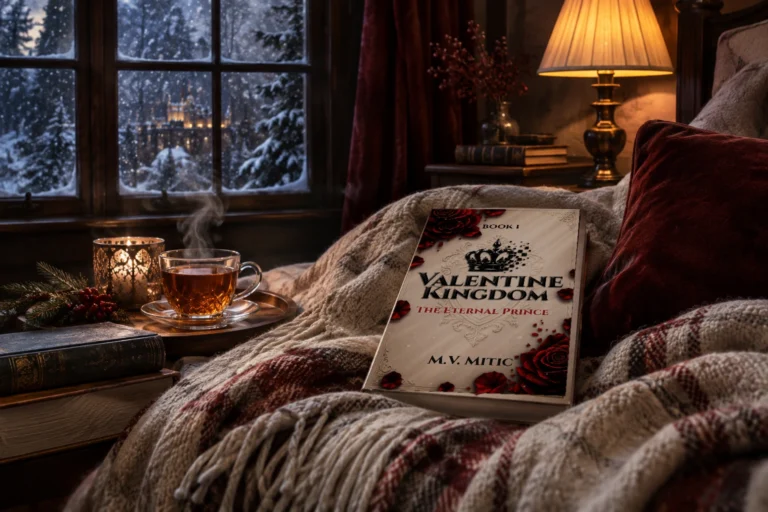
 November 11, 2026
Why I Think Reading Should Feel Like an Experience, Not a Task
Somewhere along the way, reading seems to have become another activity people are encouraged to measure. How many books have you finished?…
One of the things I enjoy most about Valentine Kingdom is that it does not have to follow a place that already exists. I am not trying to recreate a real country, city or historical period. The entire world can grow from imagination, which gives me a lot of freedom but also means I have to decide how everything fits together. There is no existing map that tells me where a particular forest should be or how far one kingdom is from another.
Usually, I do not sit down and try to design an entire kingdom at once. It starts much smaller. I might imagine a road, a forest, a room, a garden or a gate and then begin thinking about what could exist around it. Where does the road lead? What is behind the forest? How far away is another place? Little questions slowly make the world larger.
I prefer this approach because it feels natural to me. Instead of creating hundreds of locations before writing anything, I allow the world to develop alongside the story. Some places become important immediately, while others remain ideas that I may return to later.
The freedom is enjoyable, but it also creates a responsibility. An imaginary world can contain almost anything, yet I still want its geography, history and everyday life to feel connected. For me, creating a believable fictional place is not about copying reality. It is about giving readers enough consistency to imagine that the world continues existing beyond the scenes they are reading.
Sometimes an entire location begins with a very simple image in my mind. I might picture a stone road passing through a forest, an old gate leading into a settlement or a garden surrounded by buildings. Initially, I may have no idea where the place belongs or whether it will ever appear in a book.
I usually begin asking questions rather than immediately writing a detailed description. If there is a road, where does it lead? Who uses it? Is it an important route between settlements, or something that has been forgotten? If there is a gate, what lies beyond it, and why was it built there?
Those questions help me develop the surrounding area. A road suggests destinations, while a settlement suggests people, buildings and reasons for living there. Even a small room can lead me to imagine an entire residence and the people who might occupy it.
I like how one detail can gradually introduce several others. A forest might lead to a mountain range, which could create a natural boundary between two regions. A settlement might exist near a river because the water makes life and transportation easier. None of these connections needs to become an important part of the plot, but they help me understand the location.
I do not always keep the original idea. Sometimes a place changes considerably once I begin considering how it should fit into Valentine Kingdom. What matters is that the location eventually feels like part of the same world rather than something added without a reason.
Even though Valentine Kingdom is completely invented, I still want it to feel like somewhere that could continue beyond whatever the reader is seeing at that moment. A village should not suddenly come into existence because Alexander needs to visit one, and a road should not disappear from my understanding of the world simply because the characters have moved elsewhere.
If Alexander travels somewhere, I want to understand where he came from and what surrounds him. If two places feel completely different, I want there to be a reason for that difference. Perhaps the landscape changes, the climate becomes colder or the settlements have developed under different circumstances.
The reader does not need an explanation for every road or building. In fact, I think constantly explaining these details would make the story unnecessarily heavy. However, having a clearer understanding in my own mind helps me write locations consistently.
I also like considering how ordinary people might experience these places. A road that feels mysterious to a stranger may be completely familiar to someone who travels along it every day. A castle that appears impressive from a distance may simply be part of the surrounding landscape for the people who live nearby.
Those differences in perspective help fictional locations feel more convincing. The world is not equally mysterious to everyone who inhabits it, and not every place needs to exist primarily for Alexander’s benefit.
I think geography becomes more important as a fictional world grows. When a story contains several settlements, forests, mountains and kingdoms, their relationships begin influencing how characters travel and interact.
Distance is one of the first things I consider. If two places are close together, travelling between them should generally feel different from crossing a large region. Roads, terrain and available transportation can affect how long a journey takes and what the characters experience along the way.
Natural features also influence how I imagine borders and settlements. Mountains can separate regions, forests can make certain routes difficult, and rivers can connect communities. These relationships are useful because they give the map a sense of structure without requiring every location to have an elaborate explanation.
I do not need to calculate every distance with absolute precision while writing an early draft. However, I want the important relationships between locations to remain believable. A journey should not suddenly become much shorter simply because I want the characters to arrive somewhere quickly.
As Valentine Kingdom develops, these geographical decisions can also influence later stories. A route introduced in one book might become relevant again, while a region mentioned only briefly may eventually receive more attention.
For me, geography is not simply decoration. It helps determine what kinds of journeys and interactions are possible within the fictional world.
I enjoy creating places that feel different from one another. Sometimes a location becomes memorable because of an important event, but sometimes I simply like the atmosphere surrounding it. A quiet room, a forest, a road at night or a garden can remain in my imagination even when nothing enormous happens there.
Weather, lighting and surroundings can contribute to that feeling. A forest during a clear afternoon may seem welcoming, while the same path at night can become unfamiliar. Rain can make an ordinary village feel quieter, and winter can change how people experience a place they have known for years.
I do not think these details need to carry hidden meanings every time they appear. Sometimes rain is simply rain, and a forest is simply part of the landscape. The atmosphere can still influence how the scene feels without becoming an elaborate symbol.
I also like contrast. A peaceful location can exist within a dangerous kingdom, while an impressive castle may contain circumstances that are far less pleasant than its appearance suggests. Beauty and danger do not need to exist in completely separate parts of the world.
When creating a new location, I often consider what makes it distinct enough to remember. It might be the landscape, the buildings, the surrounding silence or the way people behave there. I would rather give a place a few recognizable qualities than fill its description with details that do not contribute much.
One thing I want to avoid is making every location feel as though it only exists when the main characters arrive. Alexander may be central to The Eternal Prince, but the fictional world should not revolve entirely around his immediate experiences.
A village has its own routines before he enters it. People work, travel, maintain relationships and deal with problems that may have nothing to do with the larger story. A kingdom also has its own history and responsibilities, even when those details remain outside the current chapter.
I think this background gives a setting more depth. A location becomes easier to imagine when I understand why people live there and what their ordinary circumstances might look like. That does not mean I need to write an extensive history for every settlement.
Sometimes a few practical questions are enough. What do people do for a living? Where do they obtain supplies? Is the location connected to other communities, or is it relatively isolated? How might the surrounding environment influence daily life?
Much of that information may never appear directly in the manuscript. I still find it useful because it helps me avoid treating the fictional world like a collection of empty stages waiting for characters to arrive.
For me, the most believable imaginary places are those that seem capable of continuing their ordinary existence after the scene has ended.
A location can become more interesting when it has a past. An old building might have served several purposes over the years, while a road may have connected settlements long before the current characters were born. A kingdom’s borders might reflect earlier conflicts or relationships with neighbouring regions.
I like considering those possibilities because history can influence the present without requiring constant explanations. People may preserve traditions, remember particular events or hold different opinions about the same historical figure.
These details become especially relevant in a world containing royal families, inherited identities and relationships between kingdoms. The past can influence how places are governed and how their inhabitants understand one another.
However, I do not want every location to contain an enormous historical secret. Sometimes an old building is interesting simply because generations of people have used it. Not everything needs to become part of a major revelation.
I prefer developing history when it helps explain something important about the world. If a location has a particular atmosphere or reputation, its past may provide a reason for that. If neighbouring communities behave differently, their experiences may help explain why.
The reader can discover these details gradually. I do not think a fictional world becomes more convincing by presenting its entire history before the story has properly begun.
Although I enjoy imagining locations independently, the story also influences how the world develops. Sometimes I realize that a particular journey requires a new settlement or that an existing region needs more detail than I originally planned.
I do not see that as a problem. Worldbuilding and storytelling can develop together, with each influencing the other. A new location may create interesting possibilities for future scenes, while an important event may encourage me to reconsider the surrounding geography.
The challenge is maintaining consistency. If I introduce a mountain range, a road or a neighbouring kingdom, those decisions become part of the world I am building. Later additions should account for what already exists rather than contradicting established details without explanation.
This is one reason I find maps and written notes useful. They help preserve relationships between important places, particularly when the fictional setting becomes too large to remember every detail comfortably.
I also accept that some decisions may change during drafting. An early idea is not necessarily permanent, especially when it has not yet become part of the finished story. I would rather adjust something while developing the manuscript than keep an arrangement that no longer makes sense.
For me, the map should support the story without controlling every creative decision. There needs to be enough structure for the world to feel consistent and enough flexibility for new ideas to develop.
One advantage of creating an entirely imagined world is that I do not need to introduce everything in the first book. Valentine Kingdom can contain regions, settlements and histories that remain outside Alexander’s immediate journey.
I actually prefer that. When a story reveals its entire world too quickly, there can be very little sense of discovery left. I would rather allow readers to become familiar with particular places before introducing others.
Some locations may only be mentioned briefly, perhaps during a conversation or as part of someone’s past. Those references can make the world feel larger without requiring the characters to visit every place being discussed.
Other locations may remain entirely within my notes until a future story provides a reason to explore them. An idea I develop today might not belong in The Eternal Prince, but it could become useful in another book.
I think this approach also prevents unnecessary detours. Just because I have imagined an interesting castle or forest does not mean Alexander needs to travel there. The locations should become part of the narrative when they contribute something meaningful.
That freedom allows me to keep developing the world without forcing every new idea into the manuscript I am currently writing.
I also enjoy the possibility of returning to places that readers have already encountered. A familiar location can feel different when a character visits it under new circumstances or understands something that was previously unknown.
A road might originally be part of an ordinary journey, then acquire a different meaning after the character has experienced something significant. A building may look exactly the same, but the person entering it may have changed.
I think this can be more interesting than introducing an entirely new location whenever the story needs a different atmosphere. Familiar places create opportunities to show how characters develop and how their understanding of the world changes.
Returning to a location can also reveal details that were always there but were not important earlier. A character might begin noticing aspects of the surroundings that they previously ignored, particularly after learning more about the area’s history.
However, I would not want every return to become an excuse for a major revelation. Sometimes revisiting a place is meaningful simply because it reminds a character of an earlier period in life.
For me, allowing locations to remain relevant across different parts of the series helps create continuity. The world becomes a collection of familiar places rather than an endless sequence of unrelated scenery.
The biggest advantage of creating an entirely imagined kingdom is that there are very few limits on how large it can become. I can imagine another region without needing to reproduce the geography of a real country. I can develop different cultures, landscapes and histories according to what fits the fictional world.
That freedom is one of the things I enjoy most about writing Valentine Kingdom. There is always the possibility of discovering another place, developing an old idea or connecting two locations that originally seemed unrelated.
At the same time, I do not think unlimited creative freedom means abandoning consistency. The more detailed the world becomes, the more important it is to remember what has already been established. New ideas should enrich the setting rather than make it impossible to understand.
I also know that not every imagined place will become part of a finished book. Some ideas may remain unused, while others could change considerably before they find an appropriate role. I am comfortable with that because I do not view worldbuilding as a process where every thought needs an immediate result.
Sometimes a small idea becomes much more important than I expected. Other times, something I planned carefully ends up changing completely once I begin writing. Both experiences are part of developing a fictional world.
A book eventually has to end, but the world around it does not need to end with it.
As long as I still have ideas for places, people and stories, Valentine Kingdom can continue growing. That is what makes creating an entirely imagined world so interesting to me: every location can begin with something as simple as a road, a forest or a doorway, then gradually become part of something much larger.
November 11, 2026Somewhere along the way, reading seems to have become another activity people are encouraged to measure. How many books have you finished?…
 November 11, 2026
People often talk about reading goals as though finishing more books automatically means becoming a better reader. Read fifty books this year,…
 November 11, 2026
Digital reading has made books more accessible than ever. We can carry entire libraries on our phones, purchase ebooks almost instantly and…
 November 11, 2026
Have you ever noticed how much easier it is to enjoy a book when your surroundings feel comfortable? I think the environment…
 November 11, 2026
The beginning of a new year often creates pressure to make ambitious resolutions. Write an entire novel, publish several books, build a…
 November 11, 2026
Christmas attracts enormous attention from retailers, publishers and businesses offering seasonal promotions. Throughout December, customers encounter discounted products, gift recommendations and advertisements…
 November 11, 2026
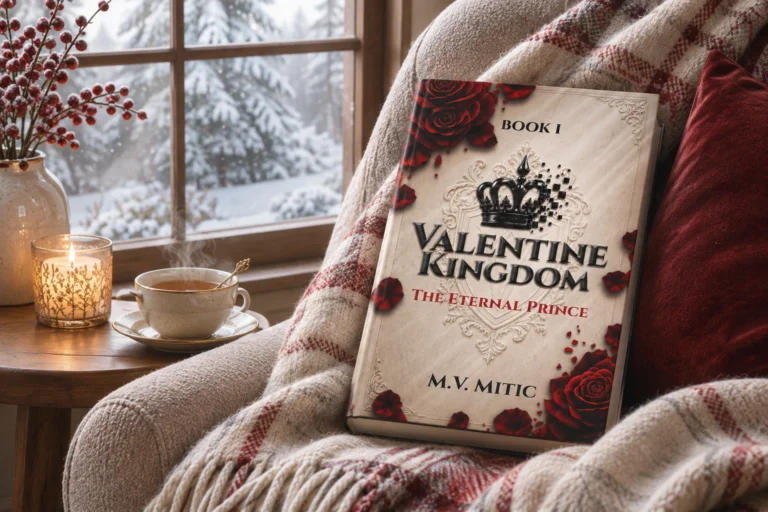
Holiday travel often involves packing more things than expected. Clothes, gifts, personal belongings and everything else compete for limited space. Whether somebody…
 November 11, 2026
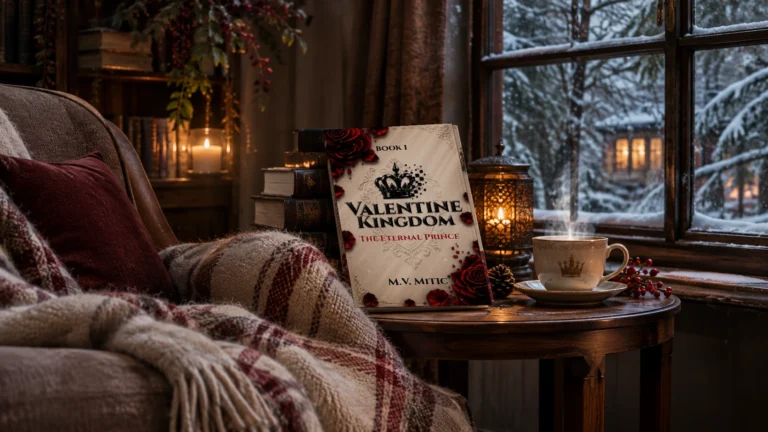
December seems like an attractive month to release a book. People are shopping for Christmas gifts, spending more time indoors and looking…
 November 11, 2026
Every winter, online stores begin advertising seasonal discounts, limited-time offers and holiday promotions. Books are no exception. A lower price can make…
 November 11, 2026
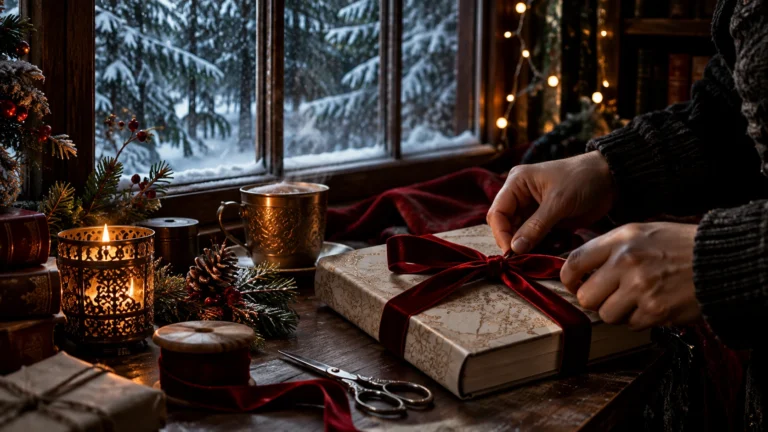
Holiday shopping has become increasingly dominated by electronics, subscriptions and products that often disappear from attention shortly after they are purchased. Every…
November 11, 2026Somewhere along the way, reading seems to have become another activity people are encouraged to measure. How many books have you finished?…
November 11, 2026People often talk about reading goals as though finishing more books automatically means becoming a better reader. Read fifty books this year,…
November 11, 2026Digital reading has made books more accessible than ever. We can carry entire libraries on our phones, purchase ebooks almost instantly and…
November 11, 2026Have you ever noticed how much easier it is to enjoy a book when your surroundings feel comfortable? I think the environment…
November 11, 2026The beginning of a new year often creates pressure to make ambitious resolutions. Write an entire novel, publish several books, build a…
November 11, 2026Christmas attracts enormous attention from retailers, publishers and businesses offering seasonal promotions. Throughout December, customers encounter discounted products, gift recommendations and advertisements…
November 11, 2026Holiday travel often involves packing more things than expected. Clothes, gifts, personal belongings and everything else compete for limited space. Whether somebody…
November 11, 2026December seems like an attractive month to release a book. People are shopping for Christmas gifts, spending more time indoors and looking…
November 11, 2026Every winter, online stores begin advertising seasonal discounts, limited-time offers and holiday promotions. Books are no exception. A lower price can make…
November 11, 2026Holiday shopping has become increasingly dominated by electronics, subscriptions and products that often disappear from attention shortly after they are purchased. Every…

Add the M.V. Mitic app to your device and start reading.