 November 11, 2026
Why I Think Reading Should Feel Like an Experience, Not a Task
Somewhere along the way, reading seems to have become another activity people are encouraged to measure. How many books have you finished?…

When I started writing The Eternal Prince, I was primarily thinking about the story. I was not sitting there with an enormous plan covering ecommerce, digital libraries, publishing infrastructure, articles, audiobooks, traffic systems and everything else that now exists around M.V. Mitic and Valentine Kingdom. Those layers appeared gradually as the project became more serious and I began thinking about how readers would eventually discover and experience the books.
The more I worked on the fictional world, the less it felt like something that should exist only inside one novel. There were more characters to explore, more locations to imagine and more possibilities than a single book could reasonably contain. At the same time, I began realizing that publishing independently would allow me to develop the experience surrounding those stories instead of relying entirely on external platforms.
However, I never want the systems surrounding Valentine Kingdom to become more important than the reason they exist in the first place. The website, digital reader, articles and commercial infrastructure can make the stories easier to discover and access, but they cannot replace the creative work itself. For me, the books remain the foundation, while everything else should support their development over time.
No amount of technology can replace a story people care about. A perfect website cannot make someone remember characters they found forgettable, and advertising cannot manufacture an emotional connection with a fictional world that feels empty. Those things may attract attention or make the experience more convenient, but eventually the reader has to encounter the writing and decide whether it interests them.
That is why I continue treating the books as the center of the project. The Eternal Prince introduces Alexander and begins exploring the circumstances that gradually change his understanding of himself and the world around him. His experiences, relationships and decisions are what give the larger fictional setting its meaning.
I spend considerable time thinking about names, atmosphere, symbols, locations and visual identity because those elements help establish a recognizable world. A fictional kingdom becomes more interesting when its identity extends beyond a collection of unrelated descriptions. Its architecture, history, relationships and traditions can influence how readers imagine the places and people within it.
However, those details still need to serve the narrative. An elaborate map or attractive character design cannot compensate for a story that gives readers little reason to care. I would rather develop a smaller number of meaningful details than introduce endless information simply to make the fictional world appear enormous.
For me, Valentine Kingdom needs to remain interesting as fiction before it can succeed as anything larger.
When I first began developing The Eternal Prince, the writing naturally encouraged me to imagine things beyond Alexander’s immediate experiences. A particular location might suggest another region, while a family connection could raise questions about events that happened long before the beginning of the story.
Those ideas did not necessarily belong in the first book. Some could become important later, while others might remain part of the background. I liked having that freedom because it allowed the fictional world to develop without forcing every interesting thought into the manuscript I was currently writing.
Over time, Valentine Kingdom began feeling less like a setting created for one particular journey and more like a connected world capable of supporting several stories. Different characters could have their own experiences, kingdoms could contain histories beyond the current narrative, and familiar places might acquire new meaning as readers learned more about them.
I do not think creating a large fictional universe requires explaining everything immediately. In fact, I prefer introducing the world gradually through the stories themselves. Readers should be able to become familiar with Alexander before being expected to understand every historical connection or political relationship surrounding him.
For me, the first book opens the door. It establishes the beginning, but the world beyond it can continue developing through future releases without needing to reveal all its possibilities at once.
I am much more interested in building one fictional universe deeply than constantly beginning unrelated creative projects. That does not mean I will never write something outside Valentine Kingdom, but I like the idea of developing a recognizable world over many years rather than abandoning everything after completing one story.
A connected series provides opportunities that individual standalone projects do not always offer. Characters can develop through several books, familiar locations can return under different circumstances, and historical details introduced earlier may become relevant later. Readers who enjoy the first story can gradually become more familiar with the world as the collection expands.
There is also a practical advantage to maintaining a consistent identity. Book covers, typography, symbols and visual elements can follow recognizable conventions across different releases. Someone who discovers a future Valentine Kingdom title may recognize its connection to the earlier books before reading the description.
I prefer that continuity because it gives the creative work a foundation that can become more recognizable over time. Instead of developing a completely new identity for every release, each book can contribute to something that already exists.
Of course, consistency should not mean making every story identical. Different characters and circumstances can introduce new perspectives while remaining part of the same fictional world. For me, that balance between familiarity and discovery is one of the most interesting possibilities of writing a long series.
As the project developed, I began thinking more seriously about the website. Initially, an author website can seem like a relatively simple requirement: somewhere to display the author’s name, introduce the books and provide information for interested readers.
However, I became interested in building something more capable. I wanted the website to become a central destination where readers could discover the books, explore articles, access free chapters and eventually purchase digital reading access directly.
That decision introduced additional technical responsibilities, including customer accounts, payments, content protection and a digital library. These systems require considerably more work than a traditional author homepage, but they also provide greater control over how readers experience the published material.
I like having one recognizable place for the books and the surrounding content. Someone discovering an article about publishing can explore the author’s other work, while a reader interested in Valentine Kingdom can access the available chapters through the same general environment.
For me, the website is not simply a promotional page that exists until the next book launch. It is infrastructure intended to remain useful as the collection grows, with new titles becoming part of a platform that readers already recognize.
One of the most important parts of the website is the digital reading experience. Rather than treating every book as a completely separate purchase with an unrelated delivery process, I wanted to develop a personal library where readers could return to their available content.
The first book provides an opportunity to establish that foundation. The reader needs comfortable typography, reliable navigation, account access and a straightforward way to recognize purchased content. Once those essential functions work properly, additional books can potentially use the same system.
I think that is more practical than rebuilding the entire reading experience for every release. The technology can be improved over time while preserving the familiar structure of the Library. Readers should not need to learn a completely different interface each time another Valentine Kingdom title becomes available.
The same principle can eventually extend to other formats. Audiobooks may require additional playback and delivery functionality, but they can still become part of a connected publishing environment rather than requiring an entirely separate identity.
For me, this is where developing infrastructure early begins making sense. The initial work may require considerable attention, but the system can continue supporting new content long after its first implementation.
Another part of the project that developed gradually was the article archive. I became interested in publishing about subjects connected to my work, including author websites, SEO, publishing, ecommerce, advertising and the process of developing a fictional world.
Those articles serve a different purpose from the books. Someone searching for information about website hosting may have no immediate interest in fantasy fiction, but they can still find something useful on the website. Another visitor might discover an article about Valentine Kingdom’s characters or landscapes and become interested in the series.
I like this approach because it creates multiple opportunities for discovery without requiring every visitor to arrive through a book advertisement. Articles can appear in search engines, be shared through social media and potentially continue attracting readers long after publication.
They can also support advertising revenue when the website qualifies for an appropriate monetization program. That gives the content another potential commercial purpose alongside introducing people to the author’s books.
However, I do not want the articles to become meaningless pages created only to generate traffic. They should provide useful information or explore subjects that genuinely belong on the website. For me, the goal is to create an original archive that supports the larger publishing project while remaining worthwhile on its own.
I also became interested in how articles and books can reach readers without requiring me to spend every day manually promoting them. Search engines, Pinterest and other social platforms provide different ways for people to discover content, but I prefer keeping the original material on my own website.
An article can be published once and then distributed through several channels. Pinterest can use its featured image, another platform can share the title and link, and Google may eventually discover the page independently. That creates several possible entry points without requiring completely different content for every service.
I find this more efficient than building a publishing strategy around constant social media activity. Social platforms can be useful for discovery, but their algorithms and audience behaviour can change. The original articles remain part of the website regardless of what happens to a particular account.
The same general principle applies to book distribution. External retailers can provide valuable services, particularly for physical books, while direct digital sales allow greater control over the reading experience. I do not think every part of publishing needs to be handled through one exclusive channel.
For me, distribution should make the work easier to discover while preserving a recognizable home for the author and the books.
Right now, the project is still small enough that I can understand almost every part of the operation myself. That gives me room to test, make mistakes, change things and observe what actually works before a much larger audience depends on the systems.
I can watch how Google indexes the website, how Pinterest distributes articles, how people use the reader and how payment processing behaves. Each of those areas provides information that can influence future decisions. A technical problem discovered while the audience is small is usually easier to investigate than the same problem affecting thousands of customers.
I prefer using this stage to establish reliable processes rather than immediately purchasing enormous infrastructure or introducing features that nobody needs yet. Hosting capacity can increase when traffic requires it, while the reading system and checkout can be improved based on actual usage.
There is also an advantage to keeping the project manageable. As someone building much of the operation independently, I want the systems to remain understandable enough that maintenance does not consume all the time available for writing.
For me, preparing for growth means making sensible decisions today while preserving the flexibility to change the technology later. It does not mean pretending that the business already operates at a scale it has not reached.
One of the things I appreciate about operating my own publishing website is the ability to observe what happens. Instead of relying entirely on assumptions, I can examine how visitors discover the articles, which subjects receive attention and whether people become interested in the books.
Google Search Console provides information about search impressions and clicks, while website analytics can help distinguish between different traffic sources and visitor behaviour. Pinterest provides another perspective through impressions and outbound clicks. Completed purchases and confirmed subscriptions offer more direct measurements of commercial interest.
I think this information becomes more useful as the website develops. Early results may be limited, and a few visitors or purchases are not enough to establish reliable patterns. However, a larger collection of articles and more consistent traffic can gradually make decisions easier.
If certain subjects begin attracting regular attention, I can explore related questions. If a particular promotional channel produces useful results, I can consider giving it more attention. If a technical feature creates confusion, I can improve it before introducing additional complexity.
For me, the objective is not to turn every creative decision into a spreadsheet. The books still depend on imagination and writing, but the publishing business can benefit from understanding what is actually working.
As Valentine Kingdom expands, I want future releases to benefit from the systems developed for the first book. The website, account structure, digital library, payment integration and newsletter should not need to be rebuilt simply because another title becomes available.
A new book will still require its own writing, editing, cover and preparation. However, the surrounding publishing process can become more familiar as the collection grows. Product pages can follow a consistent structure, readers can access purchases through the same Library, and important announcements can reach subscribers through the established newsletter.
I think this is one of the main advantages of building a connected platform. The first release requires decisions about infrastructure that later releases may not need to repeat. Improvements made to the reader can benefit the entire collection, while technical maintenance can remain concentrated within one general system.
That does not mean future products will require no additional work. Audiobooks, printed editions and other formats have different requirements, and some may need specialized services. However, they can still belong to the same publishing identity without requiring every project to start from nothing.
For me, reusable infrastructure makes long-term expansion more practical. The goal is to spend less time recreating basic systems and more time developing the content those systems are intended to support.
There are many possibilities for what Valentine Kingdom could become over time. Additional books, different editions, audiobooks, translations and other projects can all become part of the wider publishing plan. However, I do not think every idea needs to be developed immediately simply because it might eventually be useful.
Trying to build everything at once would introduce enormous complexity before knowing which features readers actually want. It would also take time away from the books themselves, which remain the main reason the wider project exists.
I prefer developing the foundation first. The website should work, the reader should be comfortable, purchases should be reliable and the available content should provide value. Once those parts are functioning properly, additional features can be considered when there is a clear reason for them.
This also gives me room to change my mind. An idea that seems interesting today may become less useful after I understand the audience better. Another possibility might emerge naturally from the way readers interact with the books or website.
For me, planning for the future should provide direction without becoming a requirement to implement every possible feature immediately. A long-term project needs patience as much as ambition.
One challenge of developing a publishing platform is that the technical and business systems can become interesting projects in their own right. Hosting, payments, analytics and website design all involve decisions that can absorb considerable time.
I enjoy developing those systems, but I also recognize that they exist to support the books. A sophisticated reading application has little purpose without stories that people want to read, and an elaborate marketing strategy cannot create meaningful characters or relationships on its own.
That is why I want to maintain a clear distinction between the creative work and the infrastructure surrounding it. The story determines what Valentine Kingdom is, while the website and other systems influence how readers discover and experience it.
I think this balance becomes increasingly important as a publishing business grows. New opportunities may appear, but they should not automatically distract from completing the books or maintaining the quality of the fictional world.
For me, the strongest long-term foundation is still the writing. Everything else can make that writing more accessible, more recognizable and easier to distribute, but it cannot replace the reason readers become interested in the first place.
When I look at how the project has developed, I find it interesting that so much of the surrounding infrastructure emerged from working on one story. The Eternal Prince began as a creative project, while Valentine Kingdom gradually became a larger fictional world with its own identity and possibilities.
The website followed a similar process. What could have remained a simple author homepage developed into a place for articles, digital reading, customer accounts and direct sales. Each addition introduced new responsibilities, but it also created opportunities for future books to use an existing foundation.
I do not expect every part of the project to become successful immediately. Search traffic takes time to develop, not every article will attract readers, and the books still need to establish their audience. Those uncertainties are part of building something independently, and I prefer learning from them rather than assuming every idea will work exactly as planned.
What matters to me is creating a project that can continue developing without losing its original purpose. The systems should become more reliable, the content library can grow, and future books can introduce readers to more of the fictional world.
I am not trying to build one book surrounded by temporary marketing that disappears after its release. I want Valentine Kingdom to become a recognizable fictional universe supported by a permanent publishing platform that can expand as the stories and audience grow.
The books come first. The website, reader, articles, distribution and business systems exist to support them. If those foundations remain connected and useful, each new release can become another part of something that was already built to last.
November 11, 2026Somewhere along the way, reading seems to have become another activity people are encouraged to measure. How many books have you finished?…
 November 11, 2026
People often talk about reading goals as though finishing more books automatically means becoming a better reader. Read fifty books this year,…
 November 11, 2026
Digital reading has made books more accessible than ever. We can carry entire libraries on our phones, purchase ebooks almost instantly and…
 November 11, 2026
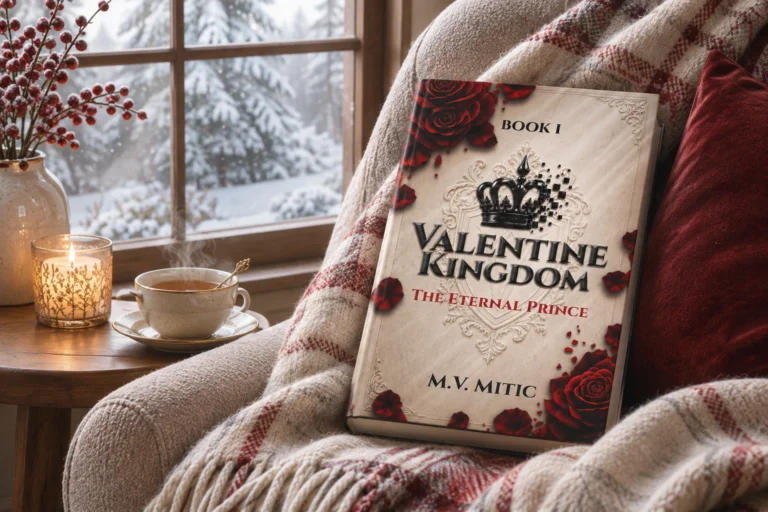
Have you ever noticed how much easier it is to enjoy a book when your surroundings feel comfortable? I think the environment…
 November 11, 2026
The beginning of a new year often creates pressure to make ambitious resolutions. Write an entire novel, publish several books, build a…
 November 11, 2026
Christmas attracts enormous attention from retailers, publishers and businesses offering seasonal promotions. Throughout December, customers encounter discounted products, gift recommendations and advertisements…
 November 11, 2026
Holiday travel often involves packing more things than expected. Clothes, gifts, personal belongings and everything else compete for limited space. Whether somebody…
 November 11, 2026
December seems like an attractive month to release a book. People are shopping for Christmas gifts, spending more time indoors and looking…
 November 11, 2026
Every winter, online stores begin advertising seasonal discounts, limited-time offers and holiday promotions. Books are no exception. A lower price can make…
 November 11, 2026
Holiday shopping has become increasingly dominated by electronics, subscriptions and products that often disappear from attention shortly after they are purchased. Every…
November 11, 2026Somewhere along the way, reading seems to have become another activity people are encouraged to measure. How many books have you finished?…
November 11, 2026People often talk about reading goals as though finishing more books automatically means becoming a better reader. Read fifty books this year,…
November 11, 2026Digital reading has made books more accessible than ever. We can carry entire libraries on our phones, purchase ebooks almost instantly and…
November 11, 2026Have you ever noticed how much easier it is to enjoy a book when your surroundings feel comfortable? I think the environment…
November 11, 2026The beginning of a new year often creates pressure to make ambitious resolutions. Write an entire novel, publish several books, build a…
November 11, 2026Christmas attracts enormous attention from retailers, publishers and businesses offering seasonal promotions. Throughout December, customers encounter discounted products, gift recommendations and advertisements…
November 11, 2026Holiday travel often involves packing more things than expected. Clothes, gifts, personal belongings and everything else compete for limited space. Whether somebody…
November 11, 2026December seems like an attractive month to release a book. People are shopping for Christmas gifts, spending more time indoors and looking…
November 11, 2026Every winter, online stores begin advertising seasonal discounts, limited-time offers and holiday promotions. Books are no exception. A lower price can make…
November 11, 2026Holiday shopping has become increasingly dominated by electronics, subscriptions and products that often disappear from attention shortly after they are purchased. Every…

Add the M.V. Mitic app to your device and start reading.