 October 25, 2026
A Halloween Reading Night for Two
A reading night for two sounds like a good Halloween plan to me because it leaves room for both company and quiet.…
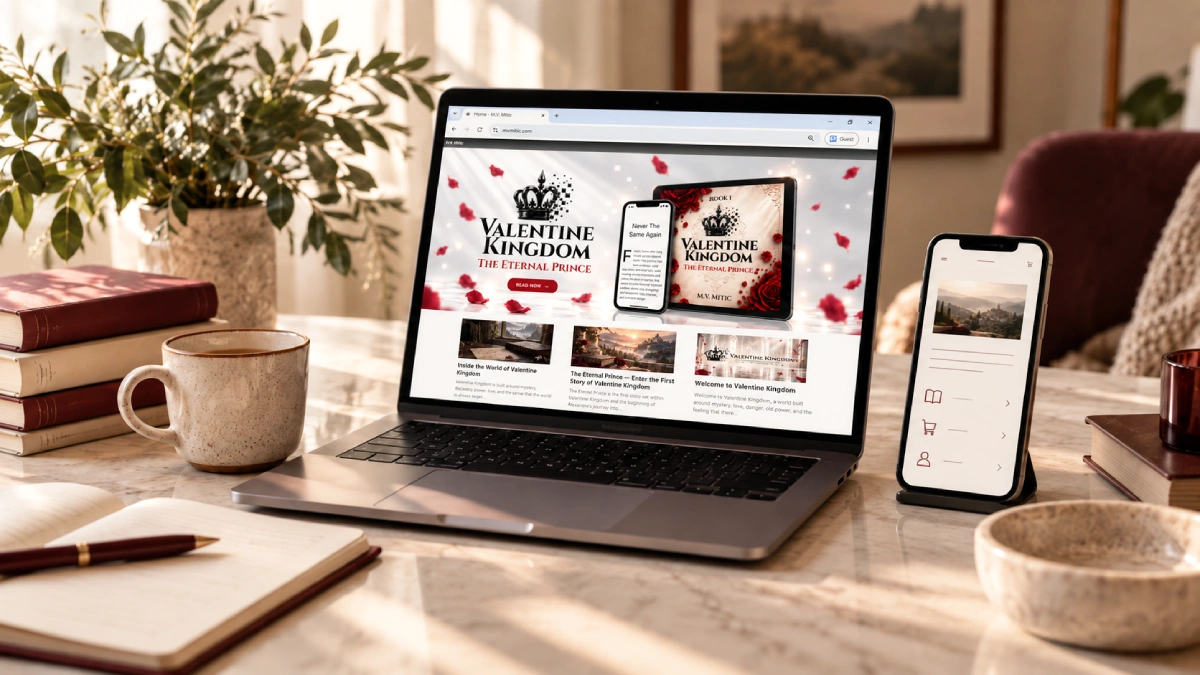
An author website can be very simple on the surface.
A homepage, a few articles, a place to read about the books, and perhaps a way to buy them.
Behind that simplicity, however, there are several technical decisions that determine whether the website feels fast, reliable and professional.
Hosting, caching, ecommerce and security are not the most exciting parts of building an author brand, but they are the foundation that keeps everything else working.
Hosting is where the website actually lives.
For a new author website, there is usually no need to begin with expensive enterprise infrastructure. A reliable shared hosting plan or managed WordPress host can be enough for a surprisingly long time.
The important things are stability, good server performance, regular backups and the ability to scale later.
I prefer starting with a simple setup and upgrading only when traffic actually demands it.
There is little benefit in building infrastructure for millions of visitors before the website has thousands.
A clean foundation is more valuable than unnecessary complexity.
One of the easiest ways to improve website performance is caching.
Instead of rebuilding the same page every time somebody visits it, the server can deliver a prepared version almost instantly.
For an author website, most pages are naturally well suited for this.
Articles, book information, homepages and public pages usually do not change for every visitor.
Dynamic pages such as login screens, shopping carts, checkout pages and user accounts need to be handled differently, but the majority of a publishing website can remain heavily cached.
That can dramatically reduce the work the server needs to perform.
Readers may come from many different countries.
A content delivery network, or CDN, stores copies of static files such as images, CSS and JavaScript closer to those visitors.
Instead of every request travelling back to the original server, much of the website can be delivered from infrastructure located nearer to the reader.
This is especially useful when a website contains large hero images, book covers and other visual assets.
Image optimisation matters as well.
Using modern formats such as WebP and avoiding unnecessarily large files can often improve performance more than adding another plugin or server.
Selling books directly can give an author more control over the reader experience.
But ecommerce becomes difficult very quickly when too many systems are added at once.
A straightforward store usually works better.
For example, WordPress combined with WooCommerce can handle products, payments and customer accounts without requiring a completely separate platform.
The purchase flow should remain short.
Readers should understand what they are buying, how much it costs and what happens after payment without having to navigate through unnecessary pages.
Every extra step creates another place where something can go wrong.
Good security should usually work in the background.
The basics matter most: HTTPS, strong passwords, updated software, backups, limited administrator access and protection against automated login attacks.
Plugins and themes should also be kept to a reasonable minimum.
Every additional component introduces another dependency that needs to be maintained.
I prefer a website where every plugin has a clear purpose.
If something is not helping the reader, improving performance or providing an essential function, it probably does not need to be there.
It is easy to overengineer a website.
Multiple servers, complex cloud systems and expensive infrastructure can sound impressive, but they are only useful when the traffic justifies them.
A better approach is to build something efficient first.
Make the website fast. Keep the structure clean. Cache what can be cached. Protect the important pages. Keep the buying experience simple.
Then scale when the numbers make the decision obvious.
That philosophy works particularly well for author websites.
The technology should support the books and the readers.
It should never become more complicated than the world it was built to present.
October 25, 2026A reading night for two sounds like a good Halloween plan to me because it leaves room for both company and quiet.…
 October 25, 2026
An ordinary room can become surprisingly unfamiliar after dark. During the day, I can see its edges, its furniture, and whatever is…
 October 25, 2026
When I imagine a gothic reading corner, I think about somewhere I would genuinely want to spend an evening. A comfortable chair,…
 October 25, 2026
There is a version of Halloween I like that involves very little preparation. A comfortable room, something good to read, a warm…
 October 20, 2026
One of the first things new authors encounter when preparing a book for publication is the ISBN. It appears on printed books,…
 October 20, 2026
Choosing the right book title can be surprisingly difficult. A title needs to fit the story, appeal to potential readers and remain…
 October 20, 2026
Finishing a manuscript can take months or years, so receiving an offer from a publisher is understandably exciting. Somebody wants to publish…
 October 20, 2026
A book cover is one of the first things a potential reader notices. Before somebody reads the description or opens the first…
 October 20, 2026
There are plenty of reasons why an author might prefer publishing under a different name. Some want privacy, others want a name…
 October 9, 2026
One thing I have never liked about social media is that having followers does not necessarily mean being able to reach those…
October 25, 2026A reading night for two sounds like a good Halloween plan to me because it leaves room for both company and quiet.…
October 25, 2026An ordinary room can become surprisingly unfamiliar after dark. During the day, I can see its edges, its furniture, and whatever is…
October 25, 2026When I imagine a gothic reading corner, I think about somewhere I would genuinely want to spend an evening. A comfortable chair,…
October 25, 2026There is a version of Halloween I like that involves very little preparation. A comfortable room, something good to read, a warm…
October 20, 2026One of the first things new authors encounter when preparing a book for publication is the ISBN. It appears on printed books,…
October 20, 2026Choosing the right book title can be surprisingly difficult. A title needs to fit the story, appeal to potential readers and remain…
October 20, 2026Finishing a manuscript can take months or years, so receiving an offer from a publisher is understandably exciting. Somebody wants to publish…
October 20, 2026A book cover is one of the first things a potential reader notices. Before somebody reads the description or opens the first…
October 20, 2026There are plenty of reasons why an author might prefer publishing under a different name. Some want privacy, others want a name…
October 9, 2026One thing I have never liked about social media is that having followers does not necessarily mean being able to reach those…

Add the M.V. Mitic app to your device and start reading.